

Tiny Ants in the Bathroom? Why They’re There and How to Get Rid of Them
Ants can show up almost anywhere in your home, but one of the most frustrating places to find these little creatures is in your bathroom. Although you may not realize it, your bathroom provides the perfect breeding ground for several different types of ants, and once ants are in your bathroom, it can take a great deal of effort to get them out again.
Tiny ants in the bathroom are usually looking for water, food residue, or a way inside. Leaky faucets, damp towels, soap residue, trash, cracks around tile, and gaps near plumbing can all attract ants. The best fix is to remove the trail, dry up moisture, seal entry points, and use bait when the colony needs to be controlled.
Table of Contents
Types of Ants In Your Bathroom
Several small ant species may show up in bathrooms, including odorous house ants, pavement ants, Argentine ants, pharaoh ants, and thief ants. Larger carpenter ants may also appear around damp or damaged wood, but they are usually not the “tiny ants” homeowners notice around sinks and tubs. Identification matters because different ants may respond to different baits and treatments.
UC IPM lists Argentine ants, Pharaoh ants, odorous house ants, thief ants, and pavement ants among common household pest ants, while Iowa State notes that small household ants commonly appear in kitchens or bathrooms and may be attracted to moisture overnight.
Find the Ants
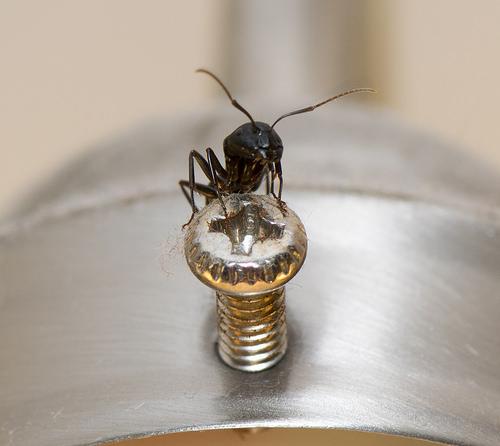
Image via Flickr by bellemarematt
If you only see one or two ants on occasion in your bathroom, then you might not have reason to worry. On the other hand, if you’re noticing large groups of ants every time you go into your bathroom, then you have an infestation on your hands.
Once you’ve decided you’re dealing with an infestation, you need to find their nest or entry point. Look around your bathroom and see if you can find an ant colony. If you’re having trouble locating the colony, you can observe the movements of the ants in your bathroom. Usually, the ants will lead you back to their nest.
Prevent Further Ants
After you’ve identified the ants in your bathroom and found where they enter and exit the room, you should take a few basic steps. Although these steps won’t eliminate your current infestation, they can prevent more ants from making their way into your bathroom.
First, you need to get rid of any freestanding water in your bathroom. This will remove the moisture that attracted the ants to your room in the first place. Second, you should go around your bathroom and caulk any areas where ants can gain access. Look for cracks and other small openings along your floors and walls. Finally, go outside your home, find the ants’ point of entry, and then seal that as well.
Fully sealing your bathroom and eliminating excessive moisture will go a long way toward preventing future infestations.
Getting Rid of Ants
Now that you’ve made sure that no further ants can get into your bathroom, you can get rid of the ants that are still in your room. Luckily, several effective ways to get ants out of your home are available, many of which are safe and non-toxic.
Essential oils may disrupt ant trails temporarily, but they usually do not eliminate the colony. For long-term control, clean the trail with soapy water, fix leaks, seal entry points, and use bait when needed.
UC IPM specifically recommends cleaning invading ants with soapy water to remove their scent trail and sealing the entry points they are using.
Baiting the Ants
Ant baits can work well because worker ants carry bait back to the colony. Use labeled, enclosed bait stations or professional treatments, and keep all bait away from children and pets. Avoid spraying near bait because cleaners and sprays can repel ants and keep them from feeding.
Iowa State says liquid and gel baits are often effective for small household ants because workers carry bait back to the nest and feed it to the queen and colony. It also recommends following label directions and keeping baits away from children and pets.
Make Adjustments Out of Your Bathroom
After you’ve completely removed ants from your bathroom, a few adjustments can be made to guarantee that you won’t see tiny ants in your home anytime soon.
Regularly cleaning your toilet, for example, can go a long way toward preventing infestations, particularly if you’re making sure to spray a disinfectant. Because ants are attracted to moisture, you should also make sure that your sinks, bathtubs, and showers are draining properly. Lastly, you can replace broken tiles in your bathroom so that there will be nowhere for ants or other pests to gain access to your bathroom.
A little regular maintenance in your bathroom can be key for preventing infestations.
Why sprays usually do not solve the problem
Sprays may kill the ants you see, but they often miss the hidden colony. UC IPM says pesticide sprays only provide temporary control and may not be safe to use indoors.
When to call a professional
Call a professional if ants keep returning after cleaning and sealing, if you see activity in multiple rooms, if ants are coming from walls or plumbing gaps, or if you suspect pharaoh ants or carpenter ants.

