
Jumping Spiders
Jumping Spiders
Pest Characteristics:
8
Is it venomous?
Yes
Common House Spider
May 2, 2022
Cellar Spiders
May 2, 2022Table of Contents
What Are Jumping Spiders?
Jumping spiders are among the most unique and diverse types of spiders in the world. Though small in size, their bold appearance and quick movements can make them seem intimidating at first glance. The good news? They are not dangerous to people and do not spread disease. In fact, they’re skilled hunters that help naturally reduce insect populations.
Take a look at our guide to learn what makes these fascinating arachnids different from other spiders and what to do if you’re seeing more of them than you’d prefer around your home.
Jumping spiders belong to the family Salticidae, which includes more than 6,000 species—the largest family of spiders worldwide. Approximately 13% of all documented spider species are jumping spiders, which explains the wide variety in their appearance and behavior.
Unlike spiders that build large webs to catch flying insects, jumping spiders actively explore and hunt their prey. They use silk for safety—creating small anchor lines (called draglines) as they move—so they can quickly retreat if needed.
Jumping spiders are generally deliberate in their movements but are known for their remarkable eyesight and impressive jumping ability. They can leap up to 20 times their body height with precision, using their jumps to capture prey or avoid threats. Most species feed on insects and other arthropods and are active during the day, often spotted along walls, windows, or floors where insects are present.
What Do Jumping Spiders Look Like?
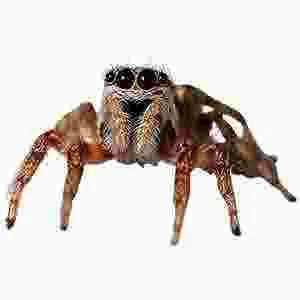
Jumping spiders are small—typically reaching about half an inch long—and have a distinctive, compact appearance. Unlike the more delicate look of many spiders, jumping spiders have shorter, sturdier legs and a stockier body shape.
One of their most recognizable features is their eyes. They have four pairs, with the large forward-facing middle pair giving them excellent vision and a surprisingly expressive look.
Many species are covered in fine hairs and display vibrant colors. Their abdomens may feature orange, yellow, red, or white markings, and some species have iridescent blue or green mouthparts. Certain types even have enlarged front legs that resemble tiny claws. A few jumping spiders have evolved to mimic ants or other insects—an impressive survival strategy in the wild.
Where Do Jumping Spiders Live?
With such a diverse group of species, jumping spiders live in nearly every part of the world. While many thrive in tropical climates, they are found on every continent except Antarctica. Scientists have even discovered a species living on the slopes of Mount Everest.
Jumping spiders prefer areas where insects are abundant. Outdoors, that might include gardens, trees, and exterior walls. Indoors, they are most often found near windows, door frames, or other areas where flying insects gather.
Living With Jumping Spiders
Jumping spiders are active during the day, which makes them easier to notice than many other spider species. Although they use venom to subdue insects, they rarely bite and pose no threat to humans. Their presence indoors is typically more surprising than harmful.
Because they feed on flies, mosquitoes, and other small insects, jumping spiders can actually be beneficial around your home. However, if you’re seeing frequent spider activity, it may indicate that other insects are present as well—since spiders go where their food source is.
If you prefer not to share your space, there are practical steps you can take to reduce spider activity while maintaining a balanced environment.
Jumping Spider Prevention Tips
If you’re noticing increased spider activity, start by evaluating how they may be entering your home:
- Inspect window seals, door frames, foundation cracks, and utility openings.
- Seal small gaps and repair damaged screens.
- Store firewood away from the house and elevated off the ground.
- Reduce indoor insect populations by keeping food sealed and maintaining cleanliness.
- Limit exterior lighting that attracts insects near entry points.
Since spiders follow their food supply, managing other insects is often the most effective way to reduce spider sightings.
If you’re unsure what’s attracting spiders or want a professional evaluation, the Bulwark team can help assess your home and recommend solutions tailored to your needs.
Common Jumping Spider Questions
How Do Jumping Spiders Reproduce?
Like many animals, male jumping spiders typically have prominent color patterns to attract females. Their species have unique and complex courtships, with the males dancing to show off the iridescent hairs on their bodies. Males also show off their agility, performing various sliding, leaping, and vibrating movements. If impressed, the female stays still and allows the male to breed with her. The number of eggs she produces, gestation time, and other factors vary depending on the species.
How Can Jumping Spiders Jump So Far?
Unlike the average spider, which has thin and twiggy legs that allow it to climb over a web, a jumping spider’s legs are small and strong, able to build pressure with body fluids and kick off a surface. Also, while most spiders only breathe through specialized lungs in their abdomens, jumping spiders breathe through their mouths, as well; this gives them the extra oxygen necessary to carry out sudden, intense activity such as jumping away from danger.
How Good Is a Jumping Spider’s Eyesight?
Jumping spiders are some of the sharpest-visioned arthropods in the world. They can see prey clearly from up to 18 inches, which is 32 times their average body length; this would be similar to a 5-foot-tall human being able to clearly see someone’s face from 180 feet away.
While these little arachnids are amazingly diverse and important to the ecosystem, they can reproduce out of control and make your home less welcoming. Contact the pest control experts at Bulwark to get a thorough, professional look at any pest problem. The sooner you find and address a potential pest population, the easier it will be to control.